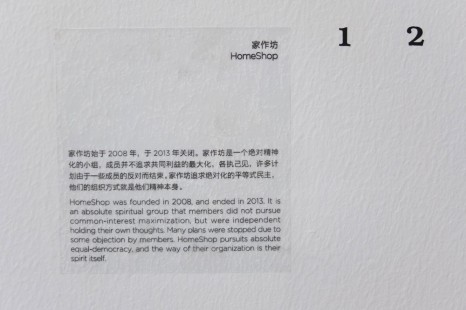
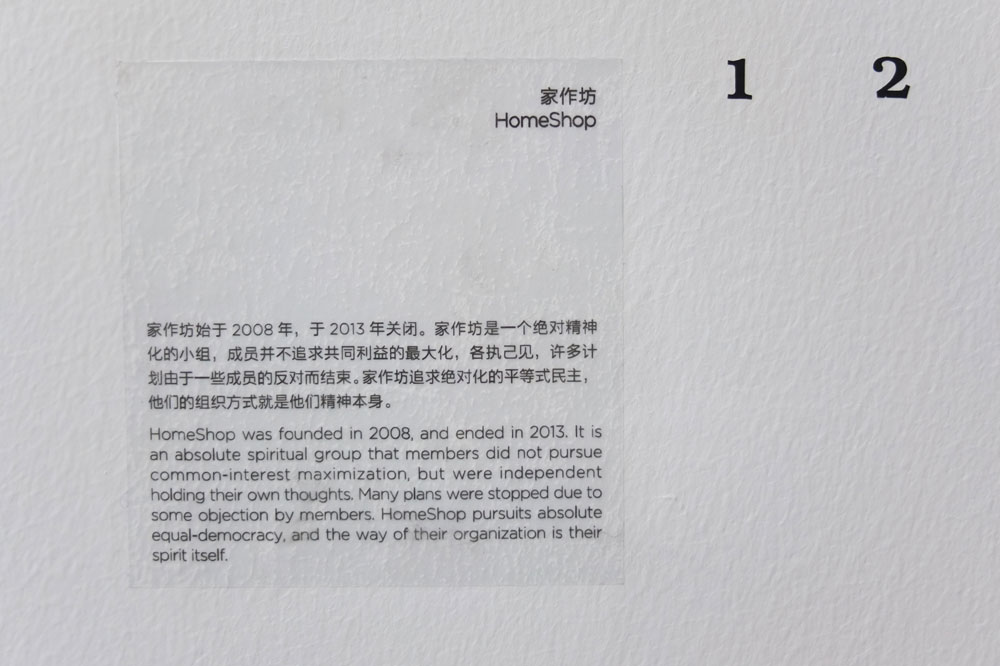
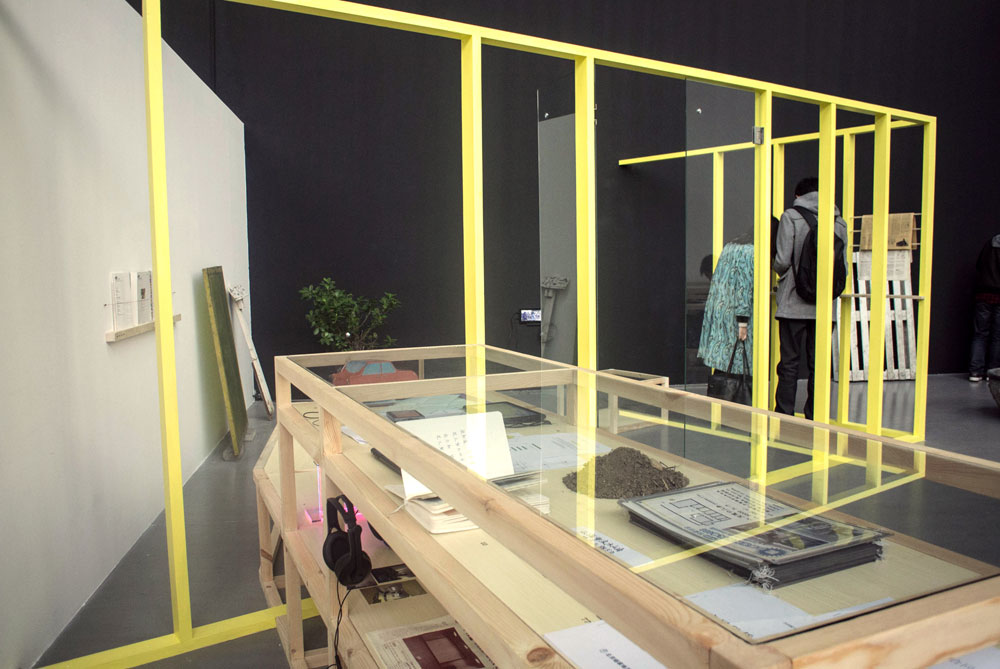
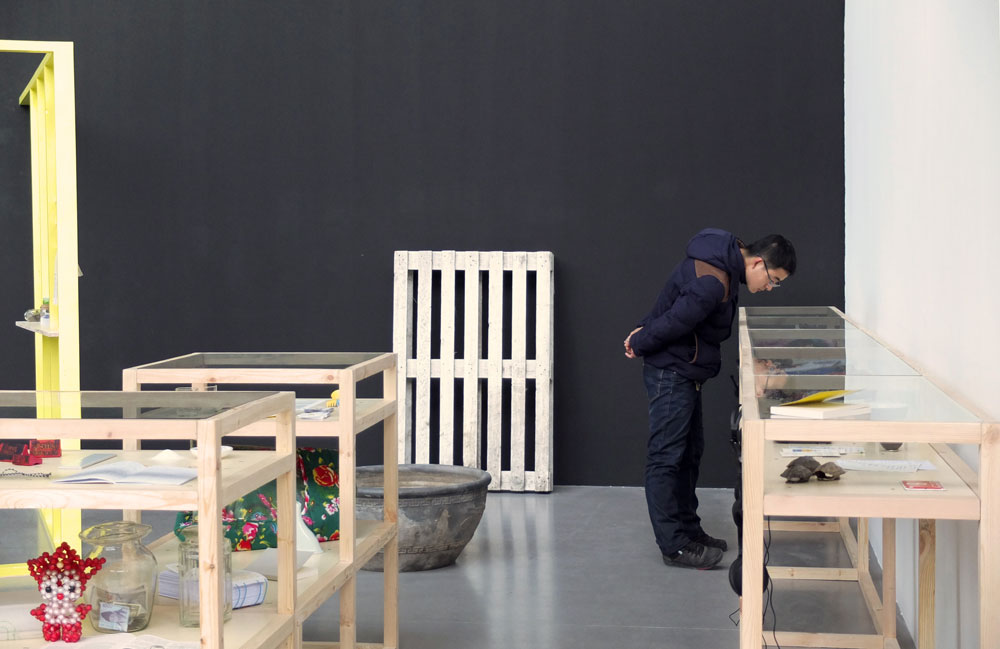
家作坊 HomeShop

家作坊的何颖雅近来引起了《ArtForum》的关注,Jocko认为《ArtForum》并不酷,而Jenni认为我们到了艺术内圈。哇~ Orz

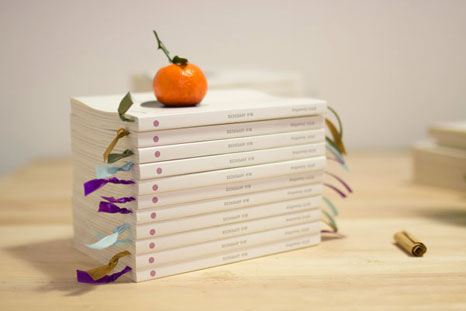
《穿》杂志近期进入了这些国际书店:Art Metropole的阅览室(加拿大多伦多),The Book Society (韩国首尔)和Detritus(美国纽黑文)。

Elaine from HomeShop was recently quoted in ArtForum’s “500 Words”. Jocko says ArtForum is not cool, Jenni says you’re on your way…

WEAR journal is most recently available for viewing/purchase here: Art Metropole‘s reading room (Toronto), The Book Society (Seoul) and Detritus (New Haven).

Pangbian’r的 Josh Feola 带着《穿》杂志开始了他长路漫漫的夏季公路旅行,从纽约到波士顿再到大峡谷和德克萨斯,他用他的双手将《穿》杂志传递给了 Printed Matter (纽约), the Harvard Bookstore (剑桥) and Domy Books (休斯敦)⋯⋯真是太厉害了!谢谢你,Josh!

Pangbian’r‘s Josh Feola treks WEAR on a summer road trip through New York, Boston, the Grand Canyon and Texas, hand delivering the journal to Printed Matter (NYC), the Harvard Bookstore (Cambridge) and Domy Books (Houston)… Looking good, thank you, Josh!


我原来公司有一个员工,他也喜欢玩户外。他那个时候他就,他原来,他也是湖南的,湖南跟我是校友。 他是属于那种什么呢?在上学期间有一天骑自行车,从学校骑出来骑到那大马路上,突然之间想我为什么不骑远一点?于是他就骑到了越南。当然那种事特例。但是这种就是说,这种性格就还是有这种性格。就我去玩儿我不追求很好的装备。

There is a guy in my company, he’s also from Hunan so we became friends. When he was still going at school, he took his bike to go home, and when he arrived on the main road he suddenly thought, why not going a bit further? And he rode his bike until Vietnam. Of course it’s a special case, but you know, it’s about character.

Sometimes we think about something, and we just do it. Comes from the transcription of a conversation I had last year with the director of an outdoor activities company.


—–

关于尤莉•约翰逊 / About Ulrike Johannsen

德国出生,在维也纳生活和工作的艺术家尤莉•约翰逊的作品主要关注的是文化之间的切磋和交流,以及对于社会的集体构建。通过她一系列的装置、现成 品和纸上作品,约翰逊始终置疑着被消费向导的生活方式给人们带来的关于“幸福”的许诺。通过巧妙地利用大众传媒和挑逗文化产业中的技术性手段,她为人们揭 示出人类欲望与后资本社会之间的缝隙。


约翰逊从2008年起在中国的工作成果,呈现在她近期的作品《斯德哥尔摩综合症》以及2010年春天在Baden艺术协会策划的群展“东西 Things”中。(点击这里-见家作坊关于此次展览的作品)


Ulrike Johannsen’s work is focused upon the negotiation and communication of culture and the collective contruction of society. Employing a range from installation, objects to paper, Johanssen questions the promises of happiness offered by the consumer-oriented lifestyle. By manipulating popular media and flirting with the mechanics of the culture industry, she reveals the gaps between human desire and post-capitalist society.


Johanssen’s engagement with China since 2008 has resulted in her latest work, entitled “Stockholm Syndrome”, and the curation of the group exhibition “东西 Things” opening at the Kunstverein Baden in 2010. (See HomeShop’s contribution to the exhibition here)


www.johannsen.net/ulrike


Songs of the Donkey

The reading club meeting, involving three texts somewhat innocent of each other’s connections, was held in the shop in Caochangdi. The texts—”The Burdens of Linearity: Donkey Urbanism” by Catherine Ingraham (1999), “Lethal Theory” by Eyal Weizman (2006) and “The Shanghai Gang” by Richard MacGregor (2010)—encompassed a broad range of issues whose relations could potentially crisscross and veer in various directions, for and against the grain of theory, out of or in the range of empirical topic. These texts were all further intertwined by their being chosen within the frame of the Donkey Institute of Contemporary Art’s Co-Director Michael Yuen, inviting speculation on applied theory or grounded discussion.

Within the sequence, the first text to be discussed was Weizman’s, which happened to be about the use of theory by the Israeli military in dealing with or rather in “interpreting” architecture, in their raids on Palestinian towns and settlements. The discussion led us from the “radical” technique of walking through walls, which is done by creating holes in existing architecture to make new paths through private spaces, and the supposedly non-hierarchical swarming techniques by which individual Israeli  soldiers carry out their tasks independently and in no particular order, to tactical specificity (targeting particular individuals for capture or assassination), all ostensibly based on ideas derived from theorists such as Foucault, Deleuze and Tschumi. But that is not to say these techniques or theories, though they explain the complexity of contemporary built environments, populations and conflicts, are any less traumatic or destructive than conventional warfare. Consider the upending of the categories of private and public, which, after seeming like a novel shift in print, is utterly destabilizing when your house becomes a thoroughfare. We talked about  how implicated theory itself was in this outcome, and whether such outcomes mandated changes in the way theory would be written.

Meanwhile Michael had to run outside because the donkey was getting some grief from one of the caretakers at the gate for trying to enter the brick art district. DICA had arrived, but for the moment, we pressed on with the texts.

Ingraham’s article counterposed a number of texts to draw out the subject of the beast in Modern architecture’s scheme of things. Beginning with Le Corbusier, who ridiculed the distractedness of the donkey vis à vis the straight intentional lines of Modern man and his cities; and continuing with Claude Lévi-Strauss’ description of getting lost on his mule in the jungle, which in the end becomes a revelation of his views of the relationship between writing systems, architecture, human organization and therefore mass violence; Ingraham’s account thereby leads its winding way to Jacques Derrida and to the subject of writing. To the ideas of the “origins” of straight lines and their import for urbanism. Ingraham says: “Urbanism and architecture, as we have already seen through the strange narratives of Le Corbusier and Lévi-Strauss, come (in a state of considerable hegemony) to the geometric (straight) line in the immediate presence of the animal (swerving, making a path), which irrevocably perturbs the hegemonic and the straight. And, lest we forget, the animal is not “The Animal,” but the principle of animality that belongs entirely to human culture.”

We took a group trip to the roadside display of books currently on view in DICA. A small crowd had gathered even on this side street, but this is the curious custom of the institute. The books were all translated with post-it notes, but there was one Chinese reader with his shirt off slowly, systematically orating aloud the English captions of David Shrigley’s red book. Someone stroked the animal’s muzzle (in fact, it looked like a bit like a horse). It’s interesting to see DICA at rest, because it is one of the rare moments when an institution can be seen to be loitering, waiting for the next thing, to move on, the cart owners squatting in the hot sun.

Finally, returning to the air-conditioned interior, we discussed the urban state of Beijing. To some degree the straight lines of Beijing were already unstraight from the beginning based on behavior like opposing traffic, bringing the intimate to the sidewalk; and the city’s fabric was already porous, plurally interpreted, multipurpose, because of the means and necessities of daily life, in the spaces of difference between the so-called privileged and underprivileged and the state and reality, most poignantly felt in the reducing to rubble of communities and erection of new developments within no time at all. And history. And some are happy, others angry, some come up with entrepreneurial solutions and some flee and some bear brunts. And yet as far as those people in the reading club meeting were aware, there is not much theory to support these observations, to reflect on the new perceptual and cognitive spaces that make up contemporary reality from this point of view. Not even co-opted theory. The last text was a chapter from Richard McGregor’s book about the inside of the Communist Party, a not-so-well understood organization. This chapter by McGregor, a financial journalist in his day-job, concerned the anti-corruption campaigns that targeted Shanghai’s dizzy urban developers and their government friends, marking the period of politcal turnover from Jiang Zemin to Hu Jintao, while it also demonstrated the difficulties facing anyone on a lower level trying to expose corruption using official bureaucratic channels. The philosophy behind this situation is challenging, because it is often not outwardly debated or addressed; but looking around at the cityscape, the effects of this hidden philosophy—visible at least in deed beneath the bold slogans—certainly seemed materially manifest. Perhaps the theory of the donkey can only be just such a blunt confrontation of material, and the reading group’s radar could simply not pick it up. When one person present, who was a local, was asked what happened to the people who get displaced when the buildings come down, he said he didn’t know.


Seed bombing has been used for alternative urban gardening techniques here and there. Idea is originated “Nendo Dango” of Masanobu Fukuoka who propose natural farming since the late 40′s, and also Green Guerrillas activist-gardeners in NYC are playing important role to spread the techniques around. Mud balls made with clay, organic fertilizer and mixed seed of flower and vegetables are tossed around the hutongs in Gulou area of Beijing. This time, we bombed !!! seeds carefully into some people’s flower pots (including flower sales guy) and crack of concrete with soil. Hope to sprouting some greens, but we’ll see… next time we will combine the hutong tour and seed bombing together. Peace out.

より大きな地図で 種団子 seed bomb を表示。Here is the link to our seed bombing route map.

—–
If you want to see what we did, these are useful sources….Video can be fun!
- Seed Bombing wiki: http://en.wikipedia.org/wiki/Seed_bombing
- Guerrilla Gardening wiki: http://en.wikipedia.org/wiki/Guerrilla_gardening
- how-to-make video: http://www.guardian.co.uk/environment/video/2008/apr/25/seedbombing


以我现在的阅历和学识,去讨论这么深刻的问题貌似有搞笑之嫌,那我就搞笑的写一写自己浅薄的看法,也许将来成长了,看了这篇的文章自己都会笑出声来。题目开大太大了,有点不知从何处下笔,中国社会现在到底是怎么了?

如果说中国社会没有生病那似乎根本不能让人相信,太多的人有太多的意见,太多的人认为是整个社会制度出了问题,整个体制出了问题需要全面的革新,但我认为,一切问题的根源远远不仅于此,或者说,体制根本不是问题的根本。

拜金、浮躁、媚外、势力、自私、仇富、笑贫……一切人性的丑恶都无以伦比的在同一时刻的中国爆发。这其实并不是一刹那间的事情,人性本身其实就潜藏着这些丑恶的东西。但竟无人以此为耻,或者说更多的人在耻于外媚于内,满脸的仁义道德,肚子里却羡慕嫉妒追求的不得了……

难 道西方人没有这种思想吗?有。一定有,因为这是人性。根据某项调查:大多数正常人只有处于社会的中上游阶层才能有幸福感,而中上层永远是少数派,大多数人 的作用是给中上层人制造优越感幸福感的。因此大多数人不觉得幸福。而我们有的时候过分强调了西方制度的优越性,公平性,却忘记了在马克思那个年代,资本主 义的阶级矛盾曾一度走到了一触即发的程度。

如果说西方社会也分层次,那为什么在西方社会最底层的人没有像中国社会这样有强烈的不满并产生严重的社会问题呢?

有人说那是因为西方社会的等级分化没有中国这么极端,是的。但是在中国这个社会等级分化极端的根源又是什么?不是我们说他极端,就没原由的极端了。也有人过分的夸大了政治因素,因为政治说到底还是人文政治,隐藏在一切背后的永远是人这个因素。

人——是个很奇妙的个体,隐藏在所有真相背后的永远离不开这个字。因为有社会,才有社会人,反之,社会人才是构成这个社会的最基本单位。一个人从出生到长成,主要受到家庭和社会两方面因素的影响,而家庭对一个人起到的作用是绝无法忽视和小看的。

我 们中国人有着极为悠久的历史根源,从周天子的“家天下”治国,到“一家不扫何以扫天下”的论调,都能看出中国人在传统上就是把小家和国家紧密相连的,把家 庭看做国家的微缩映射,这种自古而来的思维模式绵延几千年,在中国家庭的内部根深蒂固,家庭的本体实际上是血缘和人际关系的熔炉,如此重视家庭乃至家族的 中国人一直痴醉于血缘和紧密的人际关系之中,这种重视的心态会从出生带到墓地,影响一个人一生的每一个抉择,并借由家庭这个载体继续发散传承。

需 要特别强调的是,中国的家庭关系并不是西方那种纯粹的家庭关系。西方文化传承的是早期希腊和罗马的思想,他们更愿意剖析人性,诠释正义。与中国的大一统思 想是完全不同的体系,无法相提并论。中国从上古天人合一的自然至上主义思想开始,一切人文科学和自然科学都纠缠在一起发展,是一个统一的整体,无法割裂开 来,更很难从其中截取任何一部分,因为一旦拿出任何一部分,都会连带的牵出一串文化无法扯断。中国的家庭内部正是如此,在如此紧密相连的文化覆盖下,中国 家庭内部连系的远远不单纯是血缘和亲属关系,还杂糅着经济、地位、思想等诸多因素,出于家庭的小国效应,有优势因素的家庭喜爱无限代的传承这种优势因素甚 至期望更具优势,没有优势因素的家庭则渴望以取得优势因素来振兴家族。而体现在西方,除去王公贵族,人们,尤其是近代社会,历经了深刻剖析人性的善与恶, 本质等“人性”问题后,他们比我们活的要更“纯粹”。

在 中国,至今大多数家庭仍然继承了传统意志而愿意把财富、地位等优势因素或者对优势因素的渴望无限传承下去,不问下一代是否愿意,不问下一代真正的理想是什 么,这一种流淌在血液里的传承责任,又被诠释为中国式的溺爱。总之,中国家长认为只有自己认为好的才是对下一代好的,而大多数下一代则在这种家庭观念组成 的社会中别无选择,接受者家庭的“恩赐”,理所应当的“啃老”,在被强加的理念中固化,变得没有价值甚至退化。于是自古便有“富不过三代”的说法,又不乏 “穷人孩子早当家”。

而 在西方,人们更多愿意传承的是善与爱,在他们眼里,他们似乎更懂得什么可以永恒,而什么只是流于外在。银行家的儿子去“捡破烂”,警察局长的女儿去做“小 姐”,一切只关乎个人的理想,一切只在于不同的价值观和生活方式,这种在西方社会很常见的事情,在中国社会似乎不可能发生也无法让人理解,因为在西方人的 眼里,他们更愿意让家庭维系更纯洁的“爱”,“我爱家里的每个人,精神上支持,思想上关怀,但是在经济上生活上我们是完全独立的。”在美国,孩子18岁便要独立在外生活,自己赚钱养活自己,一旦有困难需要用钱,家里也只会以出借的方式给予支持。对于孩子,美国家长更愿意孩子能得到孩子自己认为的幸福,而不是家长认为的幸福。

这两种相异颇大的方式所培养出来的后代理念大行径庭,中国是追求传承财富、地位的后代,而西方是追求善,爱,理想的后代,这种差别会造就整体的社会差异。

在 中国社会可以为了追求同一利益,强者愈强,弱者则不择手段,得到者“一人得道鸡犬升天”。求之不得者,辗转反侧,继而嫉妒,仇视,愤怒,不平。而在西方社 会,因为爱与善得到了强调和传承,人们更愿意为精神而追求,为了善的梦想而努力,也许每个人有各自不同的人生目标,但方向大多总是指向爱与善的一面。

到 这里,我们不难理解,在中国社会里,不论你从事什么行业,政治、经济、文化、任何事业……这种以家为本传承地位和财富,以血缘和人际关系为重的思维模式就 会带到行业里,社会里。拉关系,走后门,任用亲戚朋友,乃至贪污受贿,违法乱纪,唯利是图……一切一切,都起源于这种历史已久的思维模式。

这 种家族传承的欲念,像一个巨大膨胀的口袋,需要一个能够收紧它的束绳,那就是宗教和对善的信仰。任何一种社会形态都无法忽视宗教和信仰的存在,它是人们对 人性里善本质的追求,在过去的中国社会,无论是孔夫子还是老子亦或是释迦牟尼,宗教和信仰都占据着人们生活的重要地位,也因此维系了一个社会的平衡,每当 这种平衡被破坏的时候就会改朝换代以重新树立起新的信仰,也因此使得中国这种家族传承的追求没有泛滥成今人之势。

当 今这个社会,人们传承了几千年的家庭观如同储藏着欲念的口袋失去了束缚口袋的束绳,即宗教和善的信仰。恶本质才会喷涌而出,这不是一个制度,一个政党能够 决定的,只要还是中国人,只要还是传承这种古老的荣衰的家族理念,只要无法再培养我们对善本质的信仰,换什么样的制度,换什么样的人去领导,都一定会不停 地重蹈覆辙,因为这个人心里一定有一个家族观在作祟,却没有信仰去束缚引导。

从当今社会建立以来,我们曾经试图改变一切过去的传统,但是如今看来改革掉的仅仅是那条束带,而植根于血脉中的家族观却难以拔除——当然,如果一旦拔除,中国社会便什么都不剩,被全盘西化了,但是无法维持平衡的现状也颇为令人堪忧。

从现在情况看来,由于曾经有一部分4、50年 代人的思想曾被革新的比较彻底,连根深的家族观都被一并拔除了,于是他们的下一代出现了较为西化的思想观念。他们追逐自我,追求善与爱,有着如同西方社会 一样的独立想法和信念,这种信念有可能慢慢传播并得到继承,但是相较占主要优势的中国传统家族观,只是极个别的个案,而且这种现象无论是否能够发展,都是 一种悲哀,因为发展的话中国几千年的家族传统将面临消失,不发展的话人性的恶本质将持续泛滥。

解决这种问题的根本方法只能是:要么中国社会被西方思想完全吞没,取得西方式平衡;要么重新给中国社会扎上束绳,取得中国式平衡。

– 转载自《人生就像绕口令》,转载于2010年7月21日 / First published 21 July 2010 by WU Yinan at Life is Like a Tongue Twister.


behind: Obey Public Virtue, Share Civilised Life
front: Construct the “Firewall”, Peace for You Me He


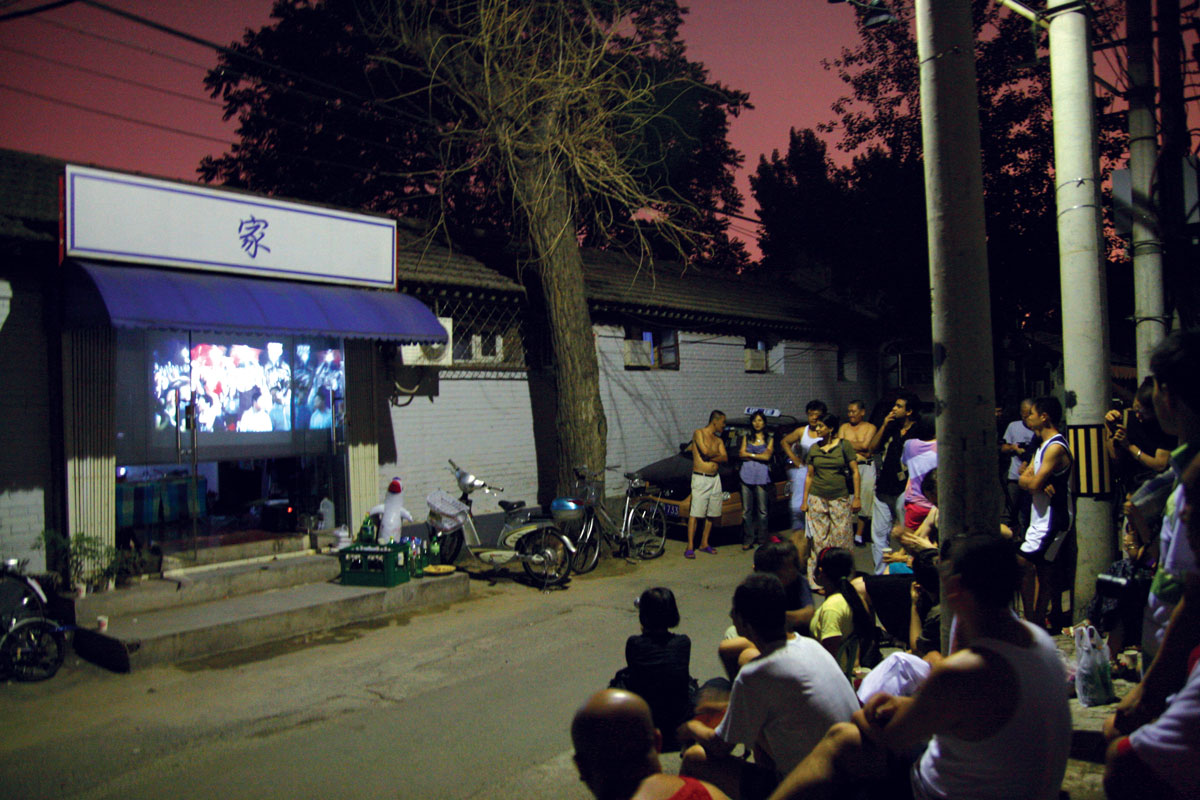
有种”练习第四:“有种”儿童电影节
BALLSY exercise number four: “A BALLSY Kid’s Movie Night”

—-

张硕,天天和Woody是家作坊的卓越遴选委员会。从五布“有种”的片子他们最后选了《少林足球》。
With a distinguished jury comprised of Bobby, Woody and Tiantian, HomeShop’s movie night gives due respect to the film Shaolin Soccer, which actually came in second runner-up to a Japanese animé called A Brave Boy, but was inaccessible due to the lack of Chinese language dubbing. Other short-listed BALLSY films: BBC’s Planet Earth, Sky Captain and the World of Tomorrow and Yasujirô Ozu’s I Was Born, But…


Get the Flash Player to see the wordTube Media Player.
欧阳潇的“有种”思想。Further thoughts on BALLSY, by OUYANG Xiao.

7月的天气非常反常,让人总是不想走进厨房,几天来做菜次数屈指可数,有的时候在超市买点凉拌菜就凑合过去了。

翡翠鸡腿肉——叫这个名字是因为莴笋在是太绿了,看着很美,像翡翠一样……

偶尔看到超市有卖鸡腿碎肉,话说鸡每个部位的肉吃起来感觉真的蛮不一样,鸡胸做不好口感会过于柴,一定要裹上鸡蛋清才能做出好味道。鸡腿就不会了,因为鸡腿上的肉鲜嫩而有弹性,完全不必复杂的腌制即可。

做法:

材料:莴笋、鸡腿肉(碎)、葱、姜

  1. 将莴笋切丁,叶子切碎,鸡腿肉add料酒、淀粉、盐、一点点五香粉,抓匀腌制5-10分钟。
  2. 油烧8成热倒入鸡腿肉,炒至变色,倒入莴笋丁。
  3. 翻炒至快熟前倒入莴笋叶,加入适量盐继续翻炒。
  4. 熄火,加味精少许,装盘。


土豆是我最爱吃的一道菜,经常做,当土豆块土豆片土豆丝都吃腻的时候,偶尔想吃一点稀的,就发明了这个sunday奶油土豆泥

做法:

材料:土豆2-3个、光明奶油半块、盐、孜然、百里香

  1. 将土豆切丁装盘。
  2. 奶油切薄片均匀的盖在土豆上,然后按个人口味均匀放入盐、孜然、百里香叶
  3. 上锅蒸25分钟左右。
  4. 取出后用勺子慢慢压制成泥,搅拌均匀
  5. 整形,撒一点黑芝麻,完工。


– 转载自《人生就像绕口令》,转载于2010年7月17日 / First published 17 July 2010 by WU Yinan at Life is Like a Tongue Twister.


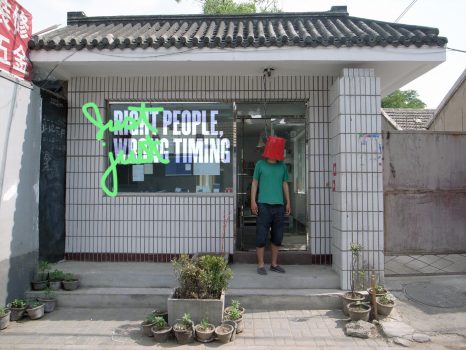
(image is from 黄伟凯 HUANG Wei Kai’s documentary Disorder)

There are things that can or should be controlled and other that can’t or shouldn’t or who cares?

Here is a topic that has been floating into my mind for a while, and that I’d like to start as a project. Ideally it would be great to have feedbacks from cities all over the world, but let’s be modest for now and see how it works.
Recent rumors about demolition in Gulou made me think  about the balance between order and disorder that shapes every city. The Gulou project is yet another proof that Beijing authorities want the city to be ordered. And commercial development is a way to achieve this. I do think that order is necessary to make things work, but isn’t too much order a way of ruining urban potential? Take Nanluoguxiang: at the beginning it was an interesting initiative, because the general process of ordering the city somehow created the conditions that allowed individual initiatives: Passby bar, and the followings. That street stayed for a couple of years in a subtle balance between order and disorder. But now it has clearly taken the way of (commercial) order, therefore killing individual’s initiative rather than creating new opportunities.
But what is order, and disorder? How is it defined, by whom and for which reasons?
I have chosen some quotes, coming from interviews or simple conversations, about the order/disorder couple:

  1. “In Beijing, you can encounter every kind of person, every kind of situation. In Western cities, everything is nice, you can’t see this mess. But it’s a creative mess.”
  2. “Sometimes, I really need to escape from Beijing. here everything is controlled. I like to go to smaller cities, there you can drink beer on the streets, everyone is outside eating chuan’r. I like that.” And a little later, in the same conversation, he told me in a very disregarding way that people in smaller cities aren’t civilized at all. But isn’t it part of the same process? It seems that in beijing, being civilized means not to eat chuan’r on the sidewalks.
  3. “London is very oppressive. I really don’t like it. It is supposed to be one of the most creative cities, but here everything is well planned, there are cameras and CCTV everywhere, there is no disorder, and I find it quite disturbing. Look at Tel Aviv, there is much more disorder, people don’t care that much.”
  4. “One of the things that I wanted to do, (but then the green revolution started, so I couldn’t), was to go around without head scarf and have friends film me. I don’t know how people would react. Maybe they would say something, disapprove. After more than 30 years of being ruled by religious law, people have integrated these values. But at the same time, women would be very happy to get rid of that scarf.” So people are negotiating their own being incoherent, between what you consider that should be ordered and what could be your own disorder.


I do think that every city has its own way of managing order/disorder. But I would be curious to explore these different ways of defining it and see also how they allow, or not, individuals to have initiatives. What kinds of order/disorder do we need to be stimulated, structure our urban life?

…to be continued


The blog of 家作坊 HomeShop is created by ourwork.is using Wordpress.
It is licensed under a Creative Commons Attribution-Noncommercial-Share Alike 3.0 License.
Best viewed with your character encoding set to Unicode UTF-8.

日志 entries RSS | 评论 comments RSS | 管理界面 meta